Alphabet Flashcards
Printable alphabet flashcards for learning letter names and sounds. Each card shows the uppercase and lowercase letter with a simple word for its sound, and the pack adds lowercase-only cards, uppercase–lowercase matching cards and a set of blank cards, with ideas for games that make practice fun.
- Instant download
- Editable Word
- Print-ready PDF
- 7-day refund
8 resource files + README (9 files total) · PDF, DOCX
Alphabet Flashcards A–Z
All 6 PDFs (14 pages) are free individually. The optional $5 ZIP adds two editable Word files: six blank cards and the ten-game guide. The 26 letter cards and wall chart are PDF only.
- A–Z word cards (PDF)
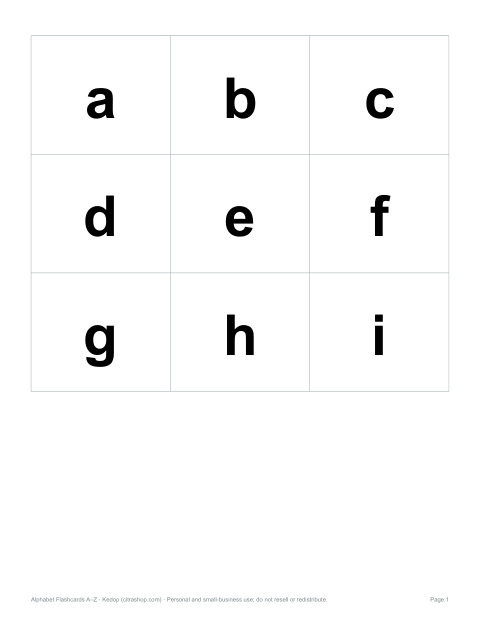
- Lowercase cards (PDF)
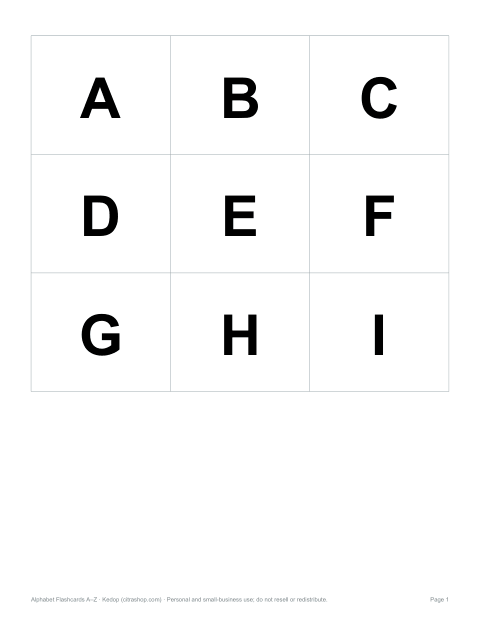
- Uppercase matching cards (PDF)
- + 3 more
$5.00 USD, one-time 8 resource files + README (9 files total)
- Instant download
- 7-day refund
- Secure checkout by Stripe
7-day money-back guarantee. Full refund within 7 days of purchase, even after you download.
Free sample: Alphabet Word Cards (PDF, 50 KB)
Alphabet Flashcards A–Z
All 6 PDFs (14 pages) are free individually. The optional $5 ZIP adds two editable Word files: six blank cards and the ten-game guide. The 26 letter cards and wall chart are PDF only.
- A–Z word cards (PDF)
- Lowercase cards (PDF)
- Uppercase matching cards (PDF)
- Alphabet wall chart (PDF)
- Blank cards (DOCX, PDF)
- Games guide (PDF, DOCX)
Formats: PDF, DOCX. Instant download after payment (link valid 72 hours, up to 5 downloads). AI-assisted: the templates were drafted with AI help and reviewed and laid out before publishing.
$5.00 USD, one-time 8 resource files + README (9 files total)
- Instant download
- 7-day refund
- Secure checkout by Stripe
7-day money-back guarantee. Full refund within 7 days of purchase, even after you download.
Free sample: Alphabet Word Cards (PDF, 50 KB)
Full refund within 7 days — see the refund policy and license.
Free printables
Single sheets you can print right now, no sign-up. The full pack adds every sheet in one download plus the editable files.
 Printable A–Z Word Cards5 pages · free PDF
 Printable Lowercase Alphabet Flashcards3 pages · free PDF
 Uppercase Letter Matching Cards3 pages · free PDF
 Printable Alphabet Wall Chart1 page · free PDF
 Printable Blank Alphabet Flashcards1 page · free PDF
 Printable Alphabet Flashcards Games Guide1 page · free PDF
What is in the pack
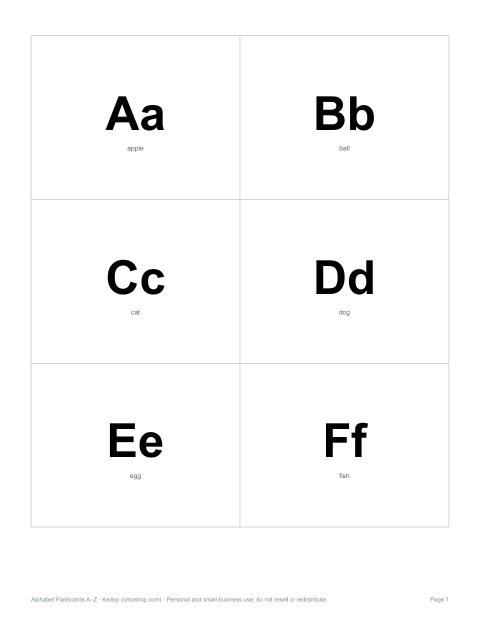
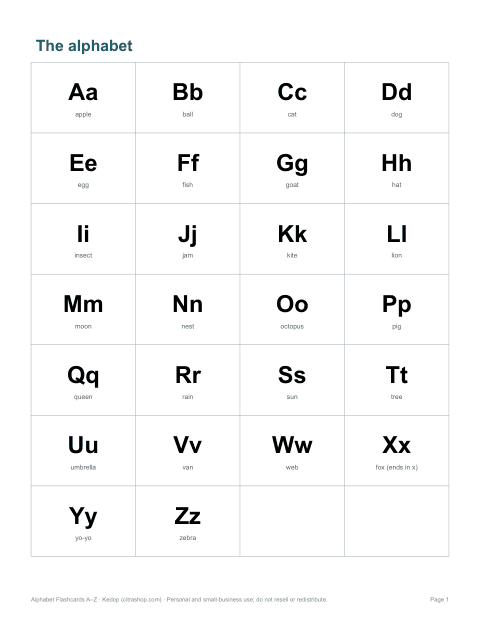
A–Z word cards — 26 cards with “Aa” and a word for the sound, such as apple, ball, cat. Lowercase-only cards — 26 cards for recognising the letters children see most in books. Uppercase matching cards — 26 capital letters to pair with the lowercase set. Blank cards — for names, sight words or letters in another language. Alphabet chart — all 26 letters on one page for the wall. Game guide — ten quick games using the cards.
Letter words used
| Letter | Word | Letter | Word |
|---|---|---|---|
| Aa | apple | Nn | nest |
| Bb | ball | Oo | octopus |
| Cc | cat | Pp | pig |
| Dd | dog | queen | |
| Ee | egg | Rr | rain |
| Ff | fish | Ss | sun |
| Gg | goat | Tt | tree |
| Hh | hat | Uu | umbrella |
| Ii | insect | Vv | van |
| Jj | jam | Ww | web |
| Kk | kite | Xx | fox (ends in x) |
| Ll | lion | Yy | yo-yo |
| Mm | moon | Zz | zebra |
Words were chosen so the first sound matches the most common sound of the letter: “a” as in apple rather than “a” as in ape, “g” as in goat rather than giraffe. X is shown with “fox”, because very few simple words start with the /ks/ sound.
Letter names and letter sounds
Children need to learn two things about each letter: its name (bee) and its sound (/b/). The sound is what they use to read and spell, so many teachers emphasise sounds early, saying the sound clearly without adding “uh” (/m/ not “muh”). Flashcards make short, frequent practice easy: show a card, say the name and sound together, and point to the word.
Teaching tips
- Start with a handful of letters rather than all 26 at once — many programmes begin with s, a, t, p, i, n because they make many simple words.
- Practise little and often: five minutes a day is plenty for young children.
- Mix in letters the child already knows so they experience success.
- Point out letters in the child’s name and in signs, books and packaging.
- Pair cards with movement: trace the letter in the air, form it with play dough.
- Celebrate progress: move mastered cards to a “know it” pile.
Alphabet games
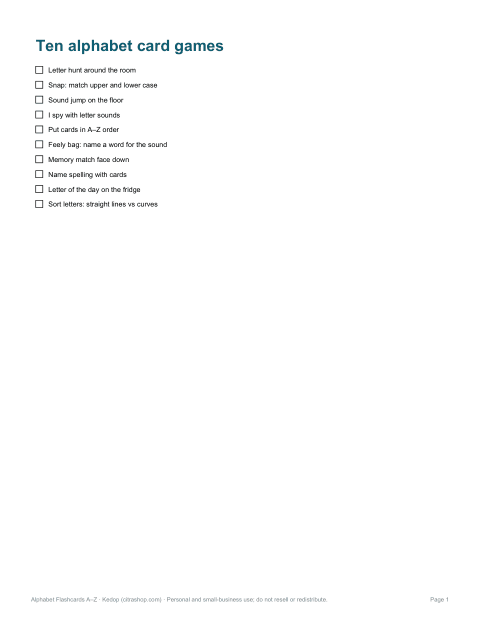
| Game | How to play |
|---|---|
| Letter hunt | Hide cards around the room; the child names each one they find |
| Snap | Match uppercase and lowercase cards |
| Sound jump | Lay cards on the floor; call a sound and the child jumps to the letter |
| I spy | “I spy something that starts with /b/”, then find the card |
| Alphabet order | Put a set of cards in order from A to Z |
| Feely bag | Draw a card from a bag and name something that starts with that sound |
Printing and making cards last
- Print on card stock (175–300 gsm / 65–110 lb).
- Cut along the lines with a paper trimmer for neat edges.
- Laminate cards for toddlers or frequent use.
- Punch a hole in a corner and keep sets on a binder ring.
- Store matching sets in separate labelled envelopes.
Who it is for
Parents of toddlers and preschoolers, preschool and kindergarten teachers, homeschoolers, tutors and English language teachers working with young learners.
Formats
Six PDF files (14 pages): word cards have six per page, letter-only sets have nine per page, and the alphabet chart fits on one page. Print on US Letter or fit to A4. Two editable Word files contain six blank cards and the ten-game guide; the letter artwork is PDF only.
When is a child ready?
Children show interest in letters at different ages — some at two, many between three and five. Follow the child’s curiosity: short, playful sessions work best, and it is fine to stop when attention wanders. By the start of kindergarten, many children know most letter names and some sounds, but there is a wide normal range.
Frequently asked questions
What age are alphabet flashcards for?
Usually ages 2–6, from toddlers to kindergarten.
Should I teach letter names or sounds first?
Many teachers teach both together, with extra emphasis on sounds for reading.
What paper should I use?
Card stock, laminated for heavy use.
Why is X shown with “fox”?
Few simple words start with the /ks/ sound, so the card shows the sound at the end of a word.
Was AI used to create the cards?
The word list was chosen with AI assistance and the cards generated by script, then checked before publishing.